
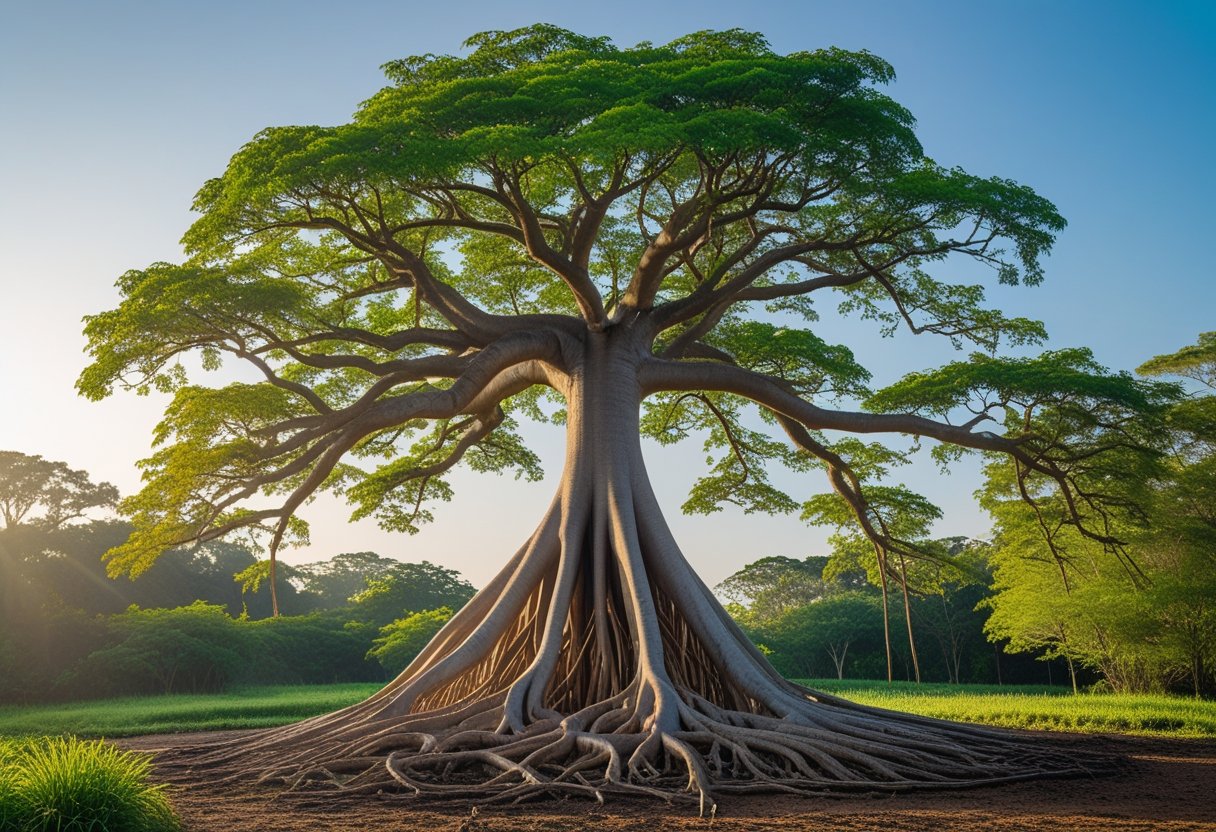
The banyan tree has long stood as a powerful symbol in many cultures, especially in South Asia. It represents immortality, resilience, and the interconnectedness of life through its ability to regenerate and provide shelter for entire communities. Its vast roots and spreading branches create not just a physical structure but a metaphor for growth and spiritual protection.
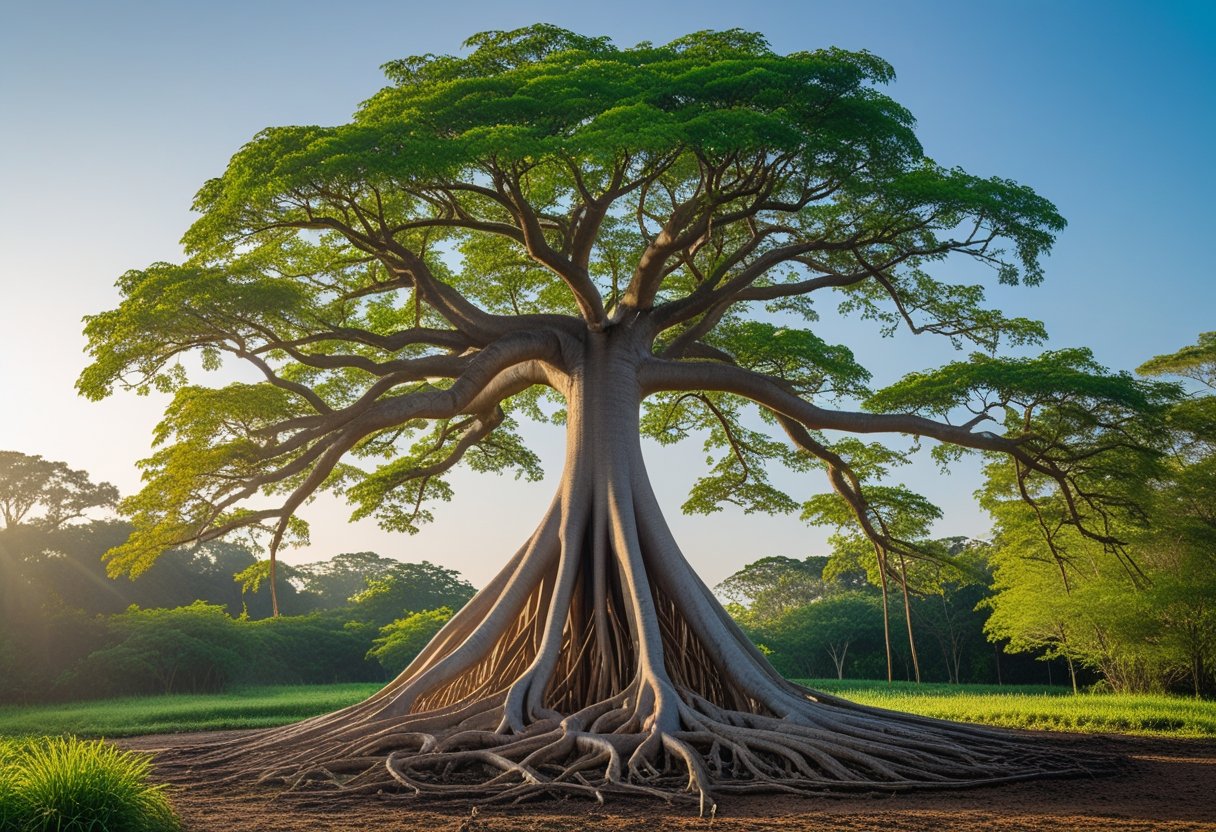
We often see the banyan tree linked to legends and religious teachings in Hinduism and Buddhism, where it embodies wisdom, eternity, and rebirth. From ancient myths of divine beings to modern spiritual practices, this tree teaches us about enduring strength and the continuous cycle of life.
Exploring banyan tree symbolism helps us understand its role beyond nature—how it connects us to deeper ideas of life, death, and renewal. It invites us to reflect on our own growth and the ways we remain grounded while reaching for higher meanings. Learn more about this fascinating tree’s spiritual and cultural impact by diving into its rich symbolism.
Core Symbolism of the Banyan Tree
The banyan tree, or Ficus benghalensis, stands as a powerful symbol in many cultures, notable for its expansive canopy and distinctive aerial roots. Its symbolism encompasses deep wisdom, exceptional strength, and the vital interconnectedness present in nature and human communities.
Wisdom and Spiritual Insight
We recognize the banyan tree as a symbol of wisdom because its sprawling roots and vast canopy suggest knowledge that grows and spreads continuously. In Hindu and Buddhist traditions, it is often linked to spiritual insight and reflection. The tree provides a quiet, shaded environment, perfect for meditation and inner growth.
Its longevity encourages us to think about growth over time—how wisdom accumulates through experience. The banyan’s presence in many sacred texts reflects a respect for its ability to embody enlightenment and the pursuit of truth. Its complex structure reminds us that insight often emerges from layered, interconnected understanding.
Strength and Resilience
The strength of the banyan tree is undeniable. Its robust trunk and aerial roots anchor it firmly, enabling it to survive harsh weather and environmental stresses. This resilience symbolizes endurance through adversity, teaching us that stability in life comes from deep foundations and adaptability.
We see the banyan as a model of strength not just in physical terms but also in spirit. Its capacity for growth and renewal, even when parts of it age or die, demonstrates persistent vitality. This ongoing regeneration represents overcoming challenges and emerging stronger, making the banyan a natural emblem of perseverance.
Interconnectedness and Community
The banyan tree exemplifies interconnectedness through its widespread roots and branches, often covering large areas and supporting diverse life forms. This growth pattern represents how everything in life is linked, from individual beings to whole ecosystems.
It also serves as a literal and symbolic space of community. The shelter and refuge it offers—shade to travelers, meeting place for gatherings—reflect the supportive role we play in our own communities. The banyan reminds us that strength arises not only from individual roots but from being part of a larger, unified whole. This lasting symbolism encourages nurturing relationships that bind and sustain us.
For more details on its symbolism in spiritual traditions, the Banyan tree is often associated with wisdom, strength, and eternity.
Natural Traits and Botanical Features
The banyan tree stands out for its unique growth patterns and physical characteristics that reveal its resilience and ecological role. Its ability to regenerate through aerial roots, exceptional lifespan, and expansive canopy all contribute to its symbolic representation of strength and protection.
Aerial Roots and Regeneration
A defining feature of the banyan is its aerial roots, which descend from branches to anchor into the soil. These roots gradually thicken into additional trunks, supporting the tree’s massive spread. This process allows the banyan to regenerate continuously, effectively renewing itself and expanding its size over time.
This regenerative ability is symbolic of the tree’s eternal nature of life, as it never truly dies but transforms through ongoing growth. Unlike typical trees, banyans increase their foothold by creating new structural supports, sometimes covering large areas and forming what appears as a grove of interconnected trunks. The aerial roots also connect the tree intimately to the earth while sustaining its elevated canopy.
Longevity and Immortality
Banyan trees are known for their remarkable longevity, often living for centuries. This long lifespan is closely tied to their ability to self-renew through aerial roots, giving an impression of immortality. While individual trunks can die, the tree’s network of roots and trunks continues to thrive, which makes it hard to determine a precise age.
The Indian fig tree, to which the banyan belongs, shares this trait of extended life and regenerative power. In many cultures, the banyan’s lifespan symbolizes eternal existence and continuity. Our understanding of the banyan highlights that its immortality is linked to this biological persistence rather than absolute endless life.
Canopy and Shelter
The banyan’s broad canopy creates a significant environmental and symbolic presence. Its thick foliage forms a natural roof that provides shelter from sun and rain. For many species, including humans, the canopy serves as a refuge and gathering place, reinforcing the banyan’s role as a provider of protection.
The sheltering effect of the canopy is a visible sign of the tree’s strength and abundance. It supports diverse ecosystems beneath it, fostering unity and community. This expansive coverage, combined with the stability of its multiple trunks, makes the banyan a natural symbol of security and embrace.
For more on the banyan’s features and symbolism, see banyan tree’s botanical traits and spiritual meanings.
Spiritual and Religious Significance
The banyan tree holds deep spiritual meaning across several Asian traditions, often embodying ideas of immortality, wisdom, and interconnectedness. It is closely tied to sacred stories and practices that emphasize growth in spirituality and the pursuit of enlightenment.
Symbolism in Hinduism and Hindu Mythology
In Hinduism, the banyan tree is revered as a symbol of eternal life and spiritual resilience. Its aerial roots that grow downward and become new trunks represent regeneration and the cyclical nature of existence.
The tree is frequently mentioned in texts like the Mahabharata and the Vedas, where it symbolizes knowledge and spiritual awakening. For example, Lord Shiva is associated with the banyan tree, often seen as an abode of divine presence. Krishna’s disciple Uddhava is said to have received spiritual teachings beneath its shade, which emphasizes the tree’s role as a place of learning and refuge.
Families and communities gather around the banyan tree, linking its sprawling branches to the idea of family unity and societal support. Festivals such as Vat Purnima celebrate the tree’s protective and nurturing qualities. The banyan’s extensive history in Hindu mythology and rituals reflects its enduring importance to spiritual growth and communal life.
Role in Buddhism and the Bodhi Tree
The banyan tree’s spiritual significance extends to Buddhism through its close relationship with the Bodhi tree, the sacred fig under which Siddhartha Gautama attained enlightenment. Both trees belong to the same botanical family, reinforcing the banyan’s connection to spiritual awakening.
Buddhists regard the banyan as a symbol of shelter, enlightenment, and the grounding needed on a spiritual journey. Its vast canopy provides a natural space for meditation and reflection, promoting inner peace and mindfulness.
In Buddhist countries like Thailand and Cambodia, banyan trees often surround temples or sacred sites. They serve as living reminders of the path to nirvana and the wisdom that grows from continuous spiritual practice. The tree’s endurance and growth mirror the teaching that enlightenment requires both patience and steadfastness.
Association with Spiritual Growth and Meditation
The banyan tree’s structure teaches us about spiritual growth through its expansive network of roots and branches. This interconnectedness symbolizes the layers of spiritual development and the importance of community in individual awakening.
For meditators, the banyan’s wide canopy represents protection and stability, essential for deep focus and mental clarity. Many spiritual traditions emphasize sitting beneath the banyan during meditation to connect with the tree’s grounding energy, which aids in reaching higher states of consciousness.
Its longevity and resilience serve as reminders that spiritual progress is gradual and requires nurturing. The banyan embodies the balance between remaining rooted in one’s values and continuously seeking new wisdom, encouraging us to cultivate endurance along our own spiritual paths.
Influence in Southeast Asian and Folk Traditions
In Southeast Asia, the banyan tree holds both spiritual and cultural significance. In Thailand and Cambodia, it is often considered a dwelling place for spirits and guardian deities, blending spiritual beliefs with local folklore. This reflects a respect for natural forces and the unseen that influence daily life.
Communities perform rituals around these trees, offering food and prayers to honor ancestors or spirits believed to inhabit them. These practices preserve a connection between humans, nature, and the spiritual realm.
The banyan tree also acts as a meeting point and symbol of community strength across many folk traditions. Its sheltering branches foster social cohesion during festivals or communal gatherings.
Through these customs, the banyan tree continues to be a dynamic symbol of protection, spirituality, and the enduring bond between land and people. Its role crosscuts religion, folklore, and environmental reverence within Southeast Asian culture.
For more on its spiritual relevance in Hindu culture, see banyan tree symbolism in Hindu traditions.
Cultural Legacy and Mythology
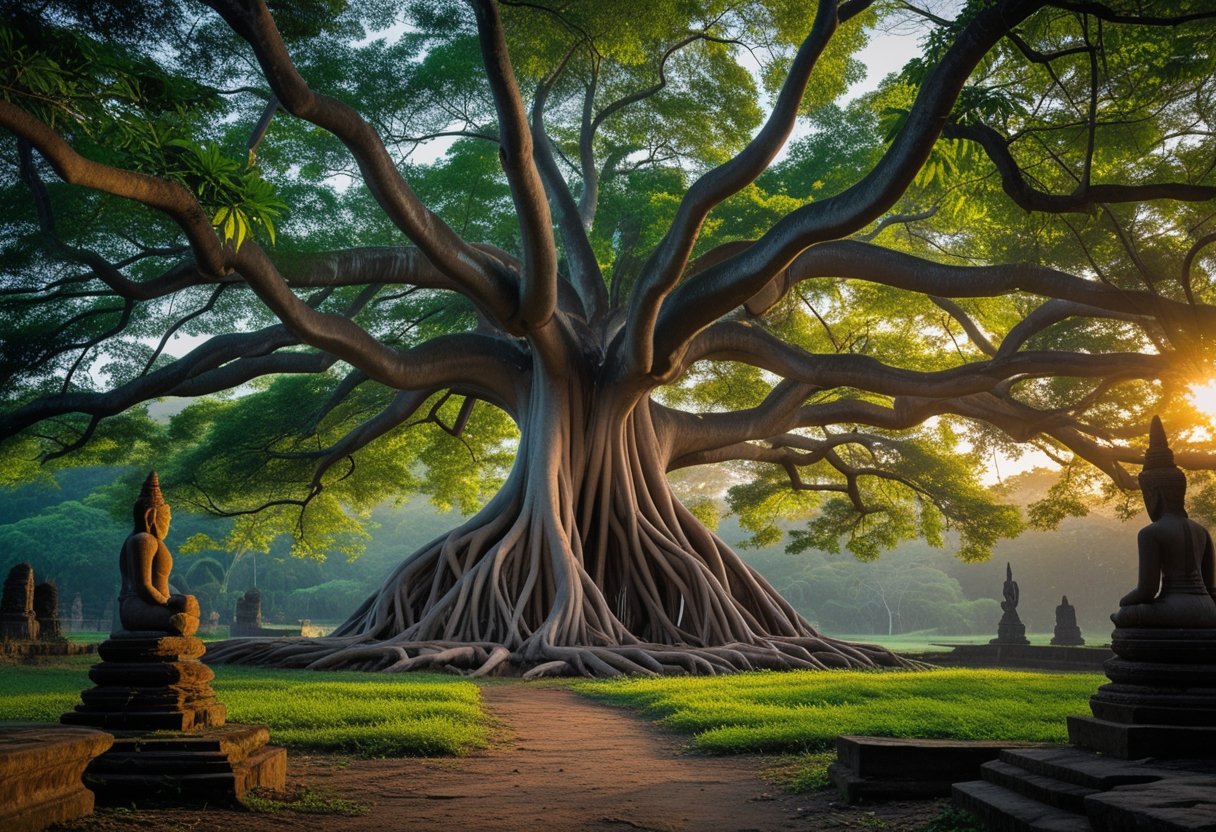
The banyan tree holds profound significance through its enduring presence in spiritual and community life. Its symbolism touches on themes like continuity and rebirth, while deeply influencing cultural traditions, mythology, and artistic expression. This legacy reflects how humans have long connected with nature to express complex ideas about life and existence.
Role in Indian Heritage and Community
In Indian heritage, the banyan tree represents the cycle of life and rebirth—a living symbol of immortality and endurance. It often stands at the center of villages and towns as a meeting place for communal gatherings, spiritual practices, and dispute resolution, fostering social harmony and continuity.
Banyan groves are regarded as sacred spaces promoting sustainability and ecological balance. Planting banyan trees has been a longstanding tradition, encouraging not only environmental health but also social cohesion. They provide shelter and shade, fostering compassion by supporting diverse life forms.
This tree is intertwined with yoga and meditation culture, offering a natural sanctuary for seekers aiming for spiritual growth. Its presence supports rituals that emphasize patience and resilience, values essential to our communal identity and personal development.
Legends, Folklore, and Wish-Fulfilling Trees
Various legends describe the banyan tree as a wish-fulfilling tree, symbolizing divine generosity and the fulfillment of spiritual desires. It is often depicted as a refuge for sages and gods, sheltering them during meditation or cosmic events. Such stories underline its role as a mediator between the earthly and the divine.
Folklore frequently attributes to the banyan qualities of eternal life and cosmic wisdom. Its vast network of roots and branches reflects the interconnectedness of all life, reinforcing spiritual symbolism about unity and the infinite cycle of existence. This interconnectedness also represents the bond between the individual soul and the universal spirit.
In Southeast Asia, banyan trees feature in mythological narratives linking nature to moral teaching, often highlighting compassion and protection. These enduring tales keep the cultural memory alive and continue to inspire reverence across generations.
Representation in Art, Architecture, and Literature
The banyan tree’s iconic form inspires diverse expressions across Indian art and architecture. It frequently appears in temple carvings, paintings, and sculptures, symbolizing the divine shelter and cosmic order. Temples like Vat Vriksha Mandir in Ujjain integrate living banyan trees into their sacred designs, blending nature with spiritual architecture.
In literature, the banyan often serves as a metaphor for wisdom and endurance. Poets and storytellers use it to evoke themes of life’s continuity and renewal. Its sprawling branches represent the sheltering of knowledge, inviting contemplation of deeper philosophical truths.
The tree’s image also permeates Indian cultural identity, found in folk songs and traditional narratives emphasizing cycles of growth, decay, and rebirth. Through these artistic channels, the banyan tree remains a potent symbol bridging nature, spirituality, and human creativity.
For further insights into its symbolism, see the guide on banyan tree symbolism.
Spiritual Lessons and Modern Interpretations
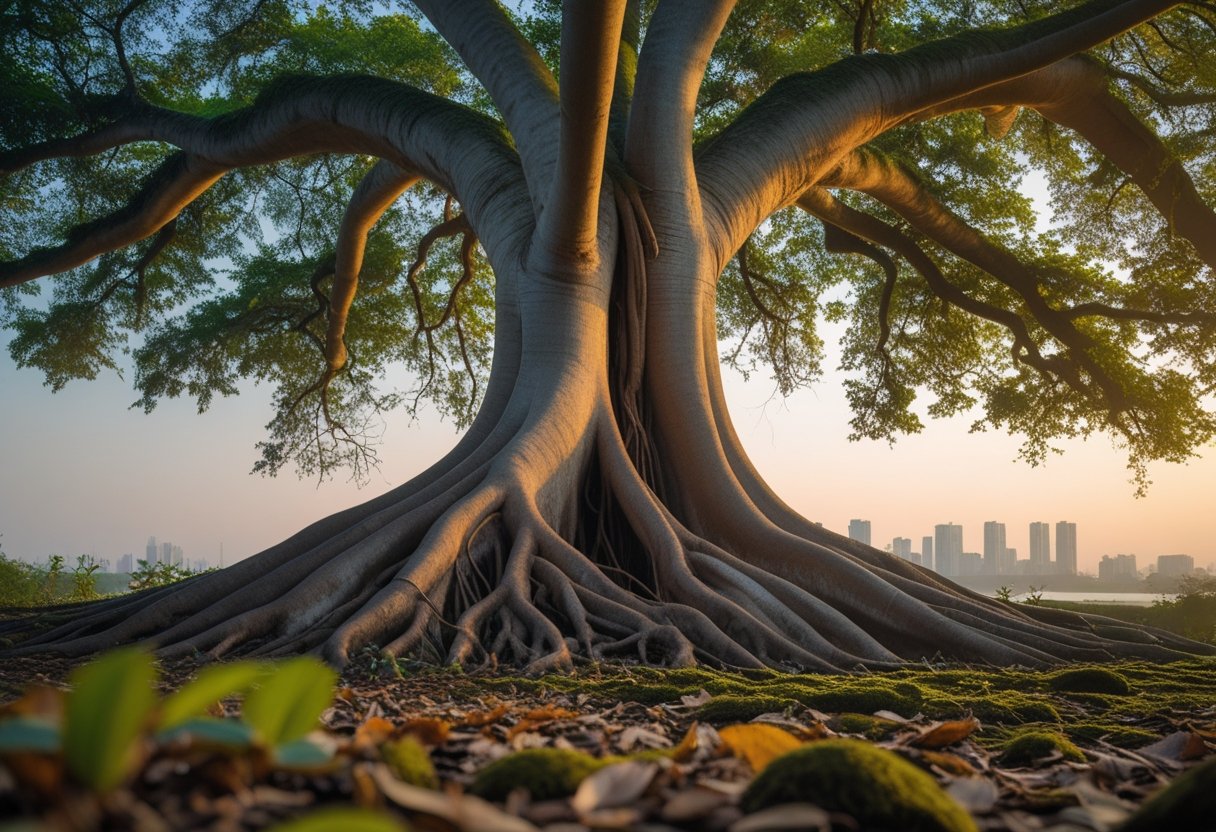
The banyan tree teaches us to explore our inner world while encouraging community and care for the environment. Its qualities of shelter and resilience inspire both personal growth and active engagement with sustainability. This balance informs how we approach spirituality and ecological responsibility today.
Introspection and Personal Reflection
The banyan tree’s widespread roots and branches reflect the journey of self-exploration. As it grows outward while staying deeply grounded, it encourages us to examine our own foundations and experiences.
When we meditate or reflect near this tree, we can focus on resilience—how we’ve endured challenges and expanded our understanding. Its enduring presence prompts us to think about legacy and interconnectedness, reminding us that personal growth is both rooted in the past and open to new possibilities.
Practicing mindfulness inspired by the banyan helps us deepen our emotional clarity and become more aware of how our relationships and histories shape our identity.
Banyan Tree in Contemporary Spiritual Practices
Many spiritual communities use the banyan tree as a living sanctuary for meditation, rituals, and storytelling. Its canopy provides physical shelter, creating a natural space for peace and reflection.
Under the tree, we find a place to foster spiritual connection—not just inwardly but collectively. Communal gatherings beneath the banyan encourage sharing wisdom and building support networks, reinforcing cultural heritage.
Meditating beneath the banyan encourages grounding and present moment awareness. Techniques include mindful breathing, visualization of strength grounded by roots, and setting clear intentions, which enhance our mental and emotional well-being.
Environmental Significance and Sustainability
Beyond spiritual symbolism, the banyan tree models environmental stewardship. Its vast root system stabilizes soil and supports diverse ecosystems, illustrating resilience and balance in nature.
By valuing the banyan’s role in the environment, we are reminded of our responsibility toward sustainability. Engaging in nature worship and environmental awareness activities near banyans fosters a deeper commitment to protecting ecosystems.
We can organize community events to celebrate this tree, promoting both ecological education and cultural connection. Through this, the banyan stands as a symbol of how spiritual values and environmental care intersect in modern life.
Learn more about the banyan tree’s spiritual significance and environmental impact at Spiritual Ark.