The cypress tree has long stood as a powerful symbol across cultures, representing themes of mourning, immortality, and hope. At its core, the cypress tree meaning is tied to both sorrow and resilience, reminding us of life’s cycles of loss and renewal. Its tall, slender form reaching skyward reflects a connection between the earthly and the divine.

We often see cypress trees in cemeteries and sacred spaces, highlighting their role as guardians of memory and tradition. Beyond grief, these trees embody endurance and eternal life, making them significant in religious and spiritual practices worldwide.
As we explore the symbolism, history, and uses of the cypress, we’ll uncover how this evergreen conifer remains a timeless emblem bridging past and present, death and hope, nature and spirituality. For a deeper understanding, we invite you to discover more about the cypress tree’s profound meaning. Learn more about the cypress tree symbolism and spiritual significance.
Core Symbolism of the Cypress Tree
The cypress tree carries rich symbolism that spans life, death, and protection. Its enduring presence in cemeteries and sacred spaces reveals layers of meaning tied to strength, transformation, and the soul’s journey.
Immortality and Eternal Life
The evergreen cypress symbolizes immortal life through its unchanging green foliage, reflecting the idea of eternal life beyond physical death. Its wood was historically believed to be incorruptible, representing durability and the soul’s continuity.
We often find cypress trees planted in graveyards because they are seen as a bridge between the earthly realm and the afterlife. This connection to eternity gives the cypress its reputation as a symbol of eternal life and resurrection. The tree’s upright, vertical growth mirrors the soul’s ascent to higher planes, reinforcing this spiritual symbolism tied to immortality and the afterlife.
Resilience and Endurance
Cypress trees belong to the Cupressaceae family, known for thriving in challenging environments. Their ability to withstand strong winds, drought, and poor soil conditions makes them a powerful symbol of resilience and endurance.
We can view their durability as a metaphor for human strength—perservering through adversity with grace. This resilience is not only physical but spiritual. The cypress’s steady growth despite hardships reminds us of the cycles of life and death, renewal, and transformation that are central to many cultural beliefs.
Mourning, Remembrance, and Sorrow
Cypress trees have deep historical ties to mourning and grief. Because they are frequently planted in cemeteries and graveyards, they serve as enduring markers of sorrow and remembrance for the dead.
Their dark, somber foliage and towering form often evoke feelings of melancholy. In many traditions, the cypress is a symbol of sorrow and is used in funerary rituals to honor those who have passed. This link to mourning highlights its role as a living memorial, offering shelter to memories and providing comfort during times of loss.
Protection and Purification
The cypress is believed to offer protection by serving as a natural shield against negative energies. Its presence in sacred spaces and around homes is intended to purify the environment and ward off harm.
The tree’s spiritual energy is often invoked for safeguarding, especially in rituals that call for cleansing and renewal. We understand the cypress’s enduring strength as a form of shelter—both physical and metaphysical—that shields against adversity and negativity, reinforcing its importance as a guardian in cultural and spiritual contexts.
For deeper insights into the cypress’s symbolic roles, see more on its folklore, healing, symbolism and meaning.
Cypress Tree Meaning in Spirituality and Religion
The cypress tree carries profound spiritual symbolism connected to life’s cycles, protection, and transformation. It often serves as a bridge between the physical and spirit worlds, guiding us through themes of renewal and inner reflection.
Spiritual Significance and Guidance
The cypress tree offers us reliable spiritual guidance through its association with endurance and protection. Known for its resilience in harsh environments, the tree symbolizes strength that we can draw on during difficult times. It acts as a guardian of the soul, reminding us of our spiritual protection beyond physical existence.
Many cultures view the cypress as a symbol of harmony and purification. Its enduring presence encourages spiritual growth and healing, making it a powerful emblem to invoke when seeking clarity or navigating personal challenges. In these ways, the tree fosters a connection to our inner selves and encourages us to remain grounded while pursuing spiritual enlightenment.
Afterlife, Rebirth, and Resurrection
The cypress tree is strongly linked to the afterlife and the concept of the immortal soul. It represents transformation, rebirth, and renewal, reflecting how life continues beyond physical death. This symbolism is present in various religious traditions where the tree often appears near gravesites, marking a passage from the material world to the spirit world.
Its association with resurrection highlights the cyclical nature of existence—death is not an end but a transition. This connection provides comfort and hope, affirming the ongoing journey of the soul. The cypress’s symbolism as a tree of life underscores its role in spiritual renewal and eternal life, encouraging us to embrace change and personal transformation.
Connection to the Divine and Meditation
We can deepen our spiritual practice by using the cypress tree as a focal point for meditation and reflection. Its calming energy supports cleansing the mind and body, promoting inner peace and divine insight. The tree’s presence often aids us in achieving spiritual enlightenment by fostering stillness and mindfulness.
In some traditions, cypress incense is burned to purify spaces and enhance communion with higher realms. Meditating near or visualizing the cypress’s enduring form can strengthen our spiritual protection and open channels for guidance. This connection encourages us to remain open to divine wisdom while finding balance within ourselves.
Explore more about this spiritual symbolism in the understanding of the cypress tree’s spiritual meaning.
Cultural and Mythological Significance
The cypress tree has held powerful meaning across many cultures, symbolizing themes such as immortality, mourning, and the connection between life and the afterlife. Its presence in myths, religious practices, and ancient lore highlights its importance as more than just a natural feature.
Ancient Civilizations and the Mediterranean
In ancient Mediterranean civilizations, the cypress tree was revered for its towering, evergreen form and long lifespan. The Phoenicians introduced the tree around 1100 B.C. to regions including the island now known as Cyprus, named after the cypress itself.
It was widely planted near burial grounds, symbolizing the soul’s journey beyond death. Its resin was valued for practical and ritual uses, supporting its status as a sacred tree associated with eternal life.
The Mediterranean cultures regarded the cypress as a link between the mortal world and the divine realms, embedding it deeply in ancient symbolism related to death and rebirth.
Greek and Roman Mythology
The cypress was closely tied to the underworld in both Greek and Roman traditions. Often linked to gods like Hades and Pluto, the tree represented the passage to the afterlife.
Its evergreen nature symbolized immortality, while its tendency not to regrow once cut made it a metaphor for finality and mourning.
In graveyards and funeral rites, the cypress was used extensively. It was seen as a guardian tree, guiding souls into the realm of the dead and serving as a visible emblem of mourning and memory.
Legends of Cyparissus and Apollo
One of the most poignant myths involving the cypress tree centers on Cyparissus, a young man and companion of Apollo. According to legend, Cyparissus accidentally killed Apollo’s sacred stag and was overwhelmed by grief.
He pleaded with the gods for the ability to mourn forever. Responding to his sorrow, the gods transformed him into a cypress tree, which has since symbolized eternal mourning and the immortal soul.
This myth, recorded by Ovid, reinforces the cypress’s association with death, guilt, and the unending nature of loss within classical mythology.
Cypress in Ancient Egypt, China, and Beyond
Beyond the Mediterranean, the cypress held varied but equally profound meanings. In ancient Egypt, it was connected with Osiris, the god of the underworld and resurrection, symbolizing renewal after death.
In China, cypress trees were associated with immortality through their connection to yang substances like jade and gold. Burning cypress resin was believed to reveal these sacred materials, linking the tree to eternal life and ancient wisdom.
The Japanese hinoki cypress is prized for its purity and incorruptibility, used in religious artifacts and temple construction, further exemplifying the tree’s spiritual resilience across multiple cultures.
For more about these diverse cultural meanings, see cypress tree symbolism in art, myth & Bible.
Cypress Trees in Rituals, Healing, and Practical Uses

Cypress trees hold a prominent place in various cultures for their role in spiritual and physical well-being. Their association with mourning, protection, and healing reflects a deep connection to the natural cycle of life, death, and renewal. The uses of cypress in different traditions often involve practical applications of its essential oils and symbolic presence.
Funerary Practices and Mourning Rituals
Cypress trees have been closely linked to funerary customs for centuries. Their tall, upright growth symbolizes the soul’s ascent and eternal life, making them common around cemeteries and burial sites. In many cultures, cypress branches are placed on graves to protect and guide the departed in their journey beyond life.
Wearing or carrying cypress during mourning offers comfort and a sense of spiritual connection. In ancient Greece, crowns made from cypress leaves were worn by priests at sacrifices to Hades. In Christian Mediterranean traditions, these trees decorate cemeteries to symbolize remembrance and the hope of immortality. This enduring symbolism highlights cypress as a bridge between life and death.
Healing, Aromatherapy, and Essential Oils
We recognize cypress essential oil for its therapeutic benefits, particularly in promoting emotional calm and physical healing. Extracted from the leaves and cones, this oil has vasoconstrictive properties useful for treating conditions like varicose veins and hemorrhoids.
In aromatherapy, cypress oil’s grounding scent helps ease nervous tension and supports mental clarity during times of transition or stress. We often use it to enhance meditation and facilitate emotional balance. Its role is not just physical healing but also spiritual purification, with the scent used to create a calming atmosphere in healing spaces.
Rituals for Protection and Balance
Cypress is a powerful tree in rituals aimed at protection and creating balance. Its strong energy is believed to ward off negative influences, making it a common ingredient in amulets and protective sachets. Burning cypress resin or needles purifies spaces and invites grounded energy.
In various traditions, cypress aligns with Saturn’s energy, symbolizing endurance and transformation. It supports spiritual growth by helping us face change with stability. Hanging several cypress branches or twigs can deflect grief and adversity, reinforcing its role as a tool for maintaining emotional and energetic harmony.
Diversity, Art, and the Lasting Legacy of Cypress Trees
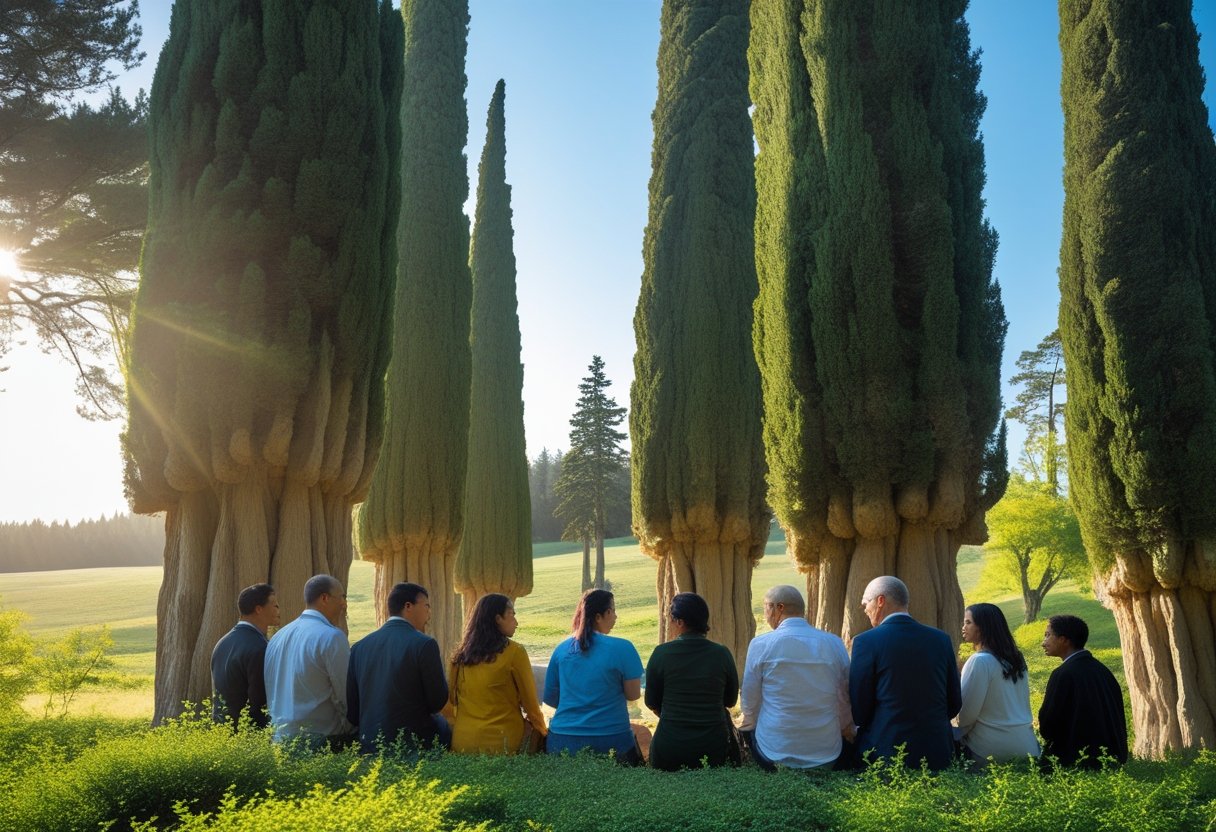
Cypress trees have a rich presence across different regions and ecosystems, offering diverse species adapted to various climates. Their appeal extends beyond their biological importance, deeply influencing cultural expressions and natural landscapes worldwide. We can explore their unique varieties, the continued inspiration they provide in art and literature, and the symbolic meaning embedded in cypress groves.
Types and Notable Varieties
Cypress trees are mostly evergreen conifers, but their diversity is extensive. The bald cypress (Taxodium distichum), native to wetlands in the southeastern United States, stands out with its striking buttressed trunks and ability to thrive in swampy areas. Meanwhile, the Monterey cypress (Cupressus macrocarpa) grows along California’s coast and is known for its durable wood and scenic, windswept forms.
Other prominent varieties include the Mediterranean cypress (Cupressus sempervirens), often seen in European landscapes and famous for its tall, slender shape. The Leyland cypress, a hybrid, is widely used in landscaping for its fast growth and dense foliage. Each type carries adaptations that suit different environments, making cypresses globally important as both ecological and ornamental trees.
Representation in Literature and Art
Cypress trees have been symbols of transition and endurance in literature and art for centuries. In Western traditions, they often signify mourning, appearing alongside graveyards and serving as a motif for death and immortality. Conversely, Eastern cultures sometimes view cypresses as symbols of grace and longevity.
Artists like Vincent van Gogh famously immortalized cypresses, capturing their unique forms and vibrant energy with expressive brushwork. Through his paintings, cypresses came to represent endurance and beauty rather than just sorrow. Similarly, various literary works evoke cypress imagery to explore themes of life, death, and renewal. This enduring presence in art and literature underlines the cultural weight these trees carry.
Cypress Groves and Symbolism in Landscapes
Cypress groves often symbolize resilience and spiritual protection in many cultures. For instance, large groves of bald cypress trees line flooded rivers and swamps, creating ecosystems essential for wildlife. These groves are natural monuments to longevity and adaptability, standing firm amid changing water levels.
Cypress groves have also been intentionally planted near cemeteries and sacred sites, symbolizing the uplifting of the human spirit or eternal life. Across regions, such groves form calming landscapes that embody peace and reflection. Whether in the Mediterranean or American wetlands, cypress trees’ presence shapes both ecological function and cultural symbolism, enriching the landscapes they inhabit.
Learn more about the diverse impact of cypress trees in art and nature at Erin Hanson’s blog on the secret meaning of cypress trees.