
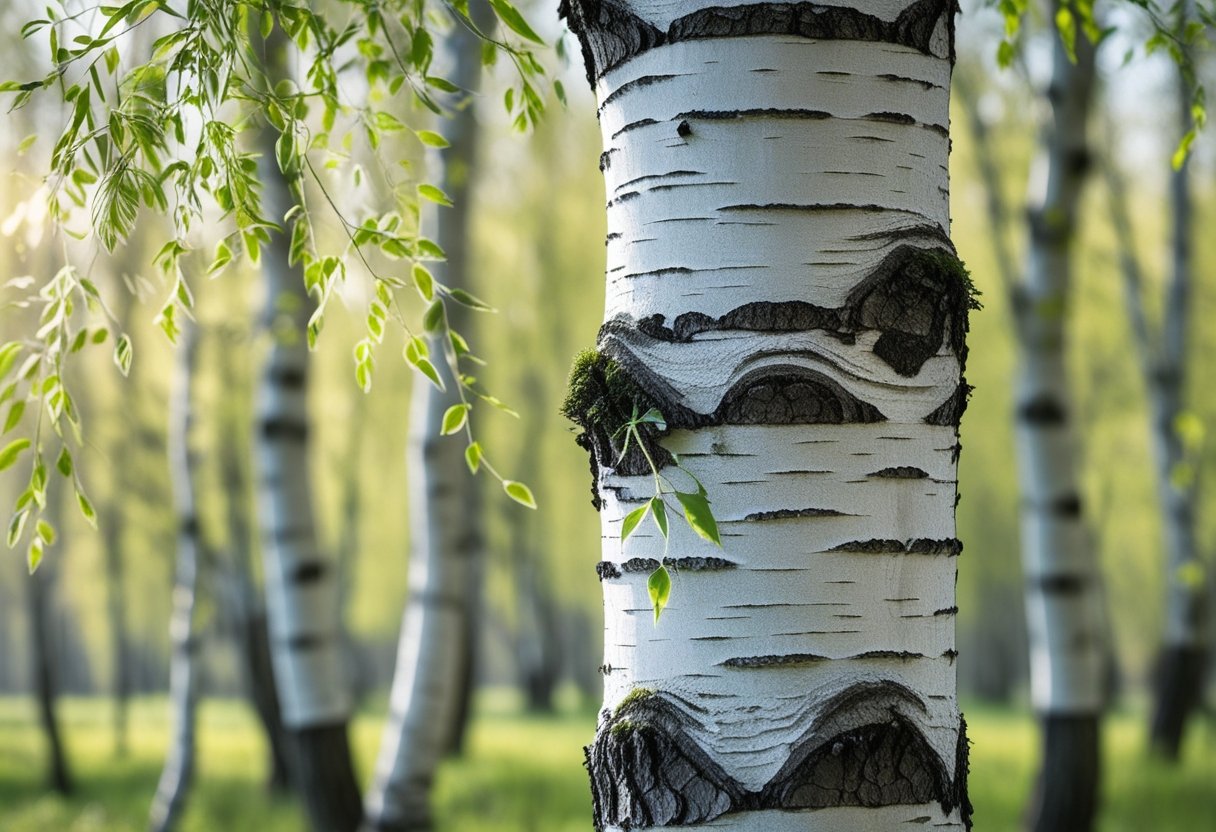
Birch trees have long held significant meaning across cultures, symbolizing protection, renewal, and adaptability. Their striking white bark and resilience in harsh environments make them natural symbols of new beginnings and strength. We see the birch tree as a powerful representation of hope, healing, and transformation.
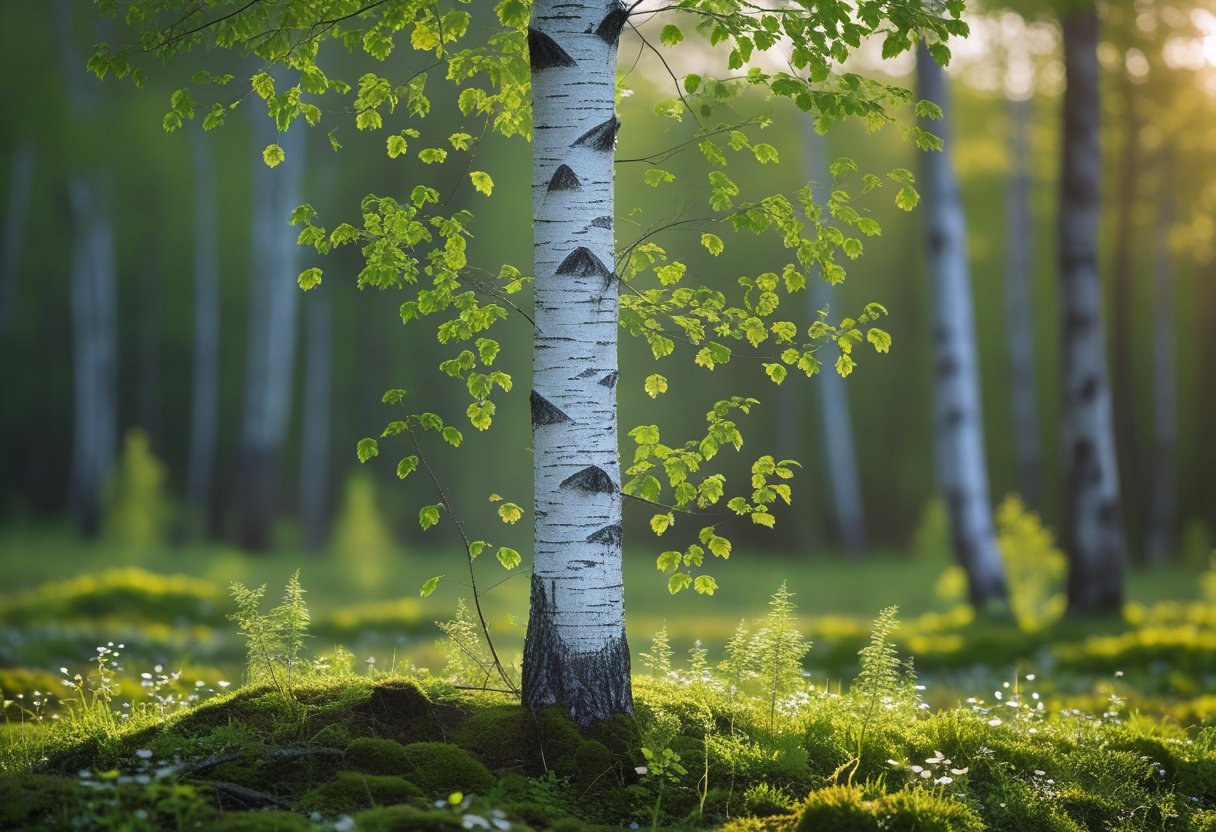
This symbolism is deeply rooted in mythology and tradition worldwide, from Native American stories of guidance and safety to Celtic associations with purification and growth. Understanding what birch trees stand for can enrich our appreciation of nature’s ability to heal and inspire.
As we explore the layers of birch tree symbolism, we uncover themes of regeneration, femininity, and protection that continue to resonate today. This broad significance makes the birch more than just a tree—it is a living emblem of resilience and fresh starts. Learn more about the deep meanings behind birch trees and how they connect to cultural values.
Core Symbolic Meanings of the Birch Tree
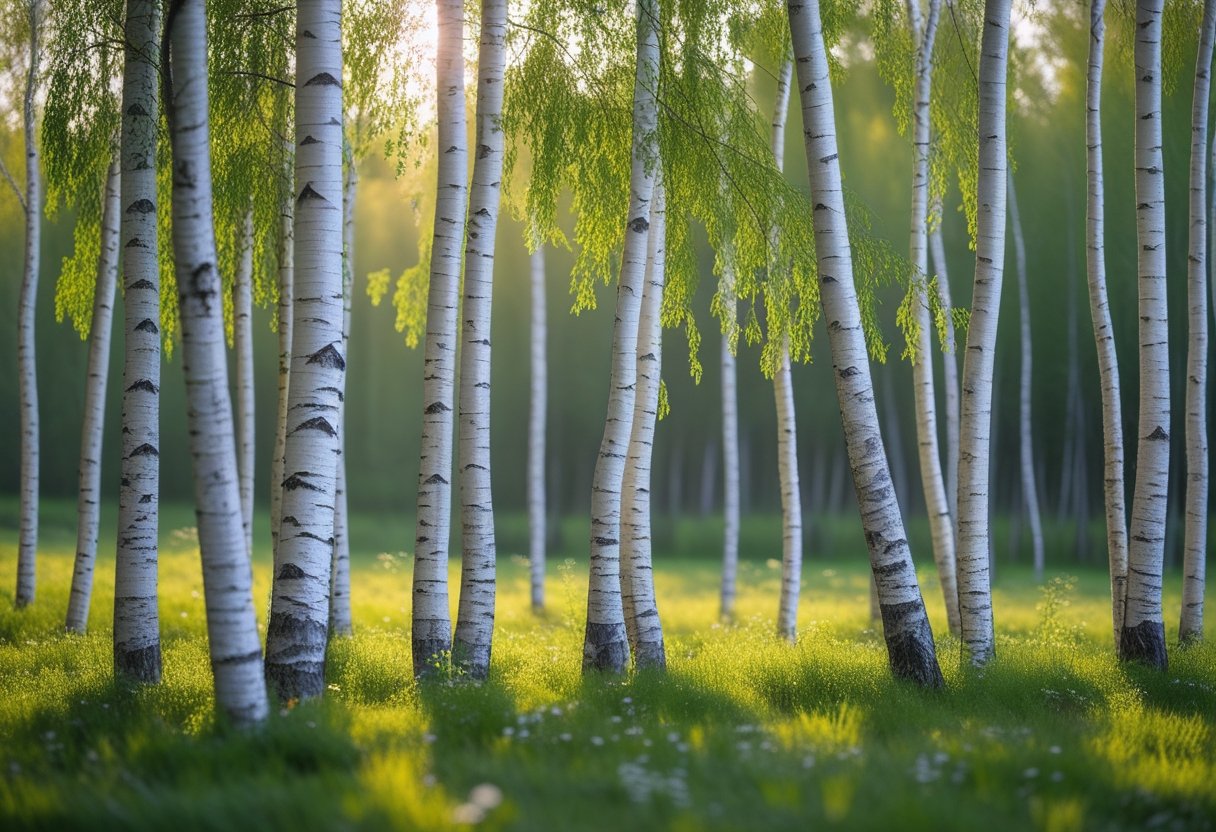
The birch tree carries a range of symbolic meanings that connect deeply with life’s cycles and human experiences. Its characteristics reflect themes of starting anew, protection, enduring strength, and the ability to adjust to changing conditions. These ideas help us relate birch tree symbolism to our own growth and challenges.
Renewal and New Beginnings
Birch trees often represent renewal because of their distinctive life cycle. Each year they shed their old bark and produce fresh, white layers, symbolizing a clean slate. This natural process mirrors the concept of new beginnings, encouraging us to embrace change and start over without fear.
In many cultures, birch trees are among the first to sprout leaves after winter, making them symbols of spring’s arrival and the rebirth of life. This positioning in the seasonal cycle links the tree to hope and fresh opportunities. The birch’s graceful appearance and bright bark highlight purity, reinforcing its role as a sign of fresh starts.
Purification and Protection
The birch tree is widely associated with purification and protection across different traditions. Its bark and branches have historically been used in rituals to cleanse spaces, bodies, and spirits of negativity. The birch’s cleansing power is both physical and symbolic, reflecting the removal of obstacles that hinder growth.
Protection is another key trait. In Celtic and Slavic cultures, birches were believed to ward off evil spirits and shield communities from harm. People would craft amulets or use birch wood in homes to create a barrier against danger. This dual significance as a purifier and protector makes the birch a powerful emblem of safety and spiritual defense.
Strength, Growth, and Resilience
Birch trees demonstrate strength not through size but through their ability to thrive in difficult environments. They grow rapidly and can endure poor soil conditions and harsh climates. This resilience shows us that strength involves adapting and persisting, not just brute force.
We see growth linked with the birch’s flexibility; its slender branches bend without breaking even under the weight of snow or wind. This capacity for endurance over time reinforces the idea that real strength includes resilience—the ability to recover and keep moving forward after challenges.
Adaptability and Change
Adaptability is a core part of birch tree symbolism. These trees are among the first to colonize areas after disturbances like fires, signaling recovery and biological succession. Their ability to adjust quickly to environmental shifts reminds us that change is not only inevitable but essential for survival and progress.
The birch’s white bark, which peels away in layers, symbolizes shedding the old to reveal the new beneath. This natural shedding exemplifies the importance of letting go in order to evolve. Through birch trees, we are reminded to embrace uncertainty and transformation with grace, seeing change as a chance to renew and strengthen our roots.
For more on the wide cultural significance of birch trees, explore the insights about their symbolism and new beginnings.
Birch Tree Symbolism in Spiritual and Personal Growth
Birch trees represent the continuous process of renewal and resilience, guiding us through challenges toward growth. Their symbolism encourages us to welcome change, deepen our spiritual connection, and unlock creative potential. This powerful imagery grounds our understanding of transformation and self-discovery.
Spiritual Journey and Transformation
Birch trees mirror our spiritual journey by embodying renewal and adaptability. Their ability to shed old bark symbolizes letting go of past limitations, which is essential in spiritual growth. As pioneers in many environments, birch trees thrive in conditions where others cannot, reminding us to embrace obstacles as opportunities for transformation.
Their presence encourages reflection on cycles of life and death, prompting us to examine our inner selves and release stagnant energies. This process supports emotional healing and the cultivation of resilience, which strengthens our spiritual foundation. The birch’s symbolism offers a visual metaphor to inspire personal breakthroughs and ongoing renewal throughout our spiritual path.
Role in Spiritual Practices
In various spiritual traditions, birch trees play a key role in rituals focused on purification and new beginnings. We often use birch branches or bark in cleansing ceremonies to clear negative energy and invite fresh starts. This practice reinforces our intention to create protective and nurturing spaces during meditation or prayer.
Incorporating birch elements into altars or sacred sites deepens our connection to nature’s cycles and amplifies spiritual focus. The tree’s association with the heart and crown chakras enhances love, clarity, and spiritual awakening during healing sessions. Engaging with birch in these ways allows us to integrate nature’s wisdom into daily practices, fostering balance and spiritual alignment.
Creativity and Inspiration
Birch trees inspire creativity through their symbolic representation of growth and new beginnings. Observing the tree’s graceful structure and unique bark can spark imaginative thought and encourage us to welcome fresh ideas. Their resilience models how creative expression can flourish even in challenging environments.
We can draw on birch symbolism to overcome creative blocks, reminding ourselves that shedding old patterns opens space for innovation. The tree’s role in spiritual growth aligns with the creative process, blending reflection with active transformation. Engaging with birch as a source of inspiration helps us cultivate originality and confidence in our creative pursuits.
Explore how birch trees guide us in combining spirituality with personal and creative development by embracing their symbolism in your life and practices. For a deeper understanding of birch symbolism in spiritual growth, visit Birch Tree Spiritual Meaning: Unlocking Resilience and Renewal in Your Life.
Cultural and Mythological Perspectives
Birch trees carry distinct meanings across cultures, often symbolizing protection, renewal, and purification. Their presence in mythology highlights connections to important deities, seasons, and spiritual practices that mark cycles of life and death.
Celtic Traditions and Ogham
In Celtic mythology, the birch tree, or Beith (sometimes spelled Beithe), holds a prominent place in the ancient Celtic tree alphabet known as Ogham. It symbolizes new beginnings, hope, and purification. Birch is the first tree in the Celtic tree calendar, marking the renewal that comes with spring.
We find birch deeply connected with Celtic festivals such as Beltane and Samhain, where birch twigs were used in rituals to protect against evil and honor the cycle between life and death. The birch was also linked with Goddess Brigid, who represents healing and fertility, reinforcing the tree’s association with protection and growth.
Often called the “Lady of the Woods,” the white bark of birch symbolizes purity and femininity, respected for its healing properties and its role in supporting new life within the forest.
Norse and Slavic Myths
Birch trees held important symbolism for the Norse people, representing protection, purification, and rebirth. The tree’s ability to grow quickly and regenerate after fire or damage metaphorically matched the idea of resilience and new life.
In Norse beliefs, birch was favored in rituals associated with goddesses such as Frigga and Freya, who were linked to love, fertility, and the natural world. Birch was also connected to Thor, where its protective qualities helped ward off evil spirits. The tree’s wood was sometimes used to create protective charms.
In Slavic mythology, birch carried similar symbolism: purity, healing, and protection. It was revered in both spiritual and everyday contexts, serving as a symbol of the community’s connection to nature and their collective safety.
Native American Beliefs
For many Native American cultures, the birch tree is a symbol of purification and transformation. Its bark was crucial for making canoes, containers, and shelters, underscoring its practical and spiritual significance.
Birch trees represented new beginnings and renewal, linked to the purification of mind and spirit during seasonal ceremonies. The tree was seen as a gift from nature to support survival and growth, especially after difficult winters.
Its presence in rituals emphasized cleansing—both physical and spiritual—and birch sap was valued as nourishment. The symbolism often focused on the hope that birch brought with spring, as one of the first trees to produce leaves.
Other Cultural Associations
Beyond these traditions, birch trees maintain significance worldwide. In central Russia, birch is considered the national tree, symbolizing the country’s spirit and resilience. The soft white bark evokes purity, while the tree’s resilience connects to endurance through hardship.
In European folk practices, birch was often used in Beltane fires alongside oak, marking the arrival of spring and fertility. The burning of birch was thought to aid crop growth and protect the community.
Birch is also associated with Venus in some classical interpretations, symbolizing beauty and grace, aligning with the feminine qualities emphasized in Celtic and Norse tales. In many cultures, birch remains a living symbol of protection, healing, and the cycles of life found in nature.
Such rich and diverse perspectives show how the birch tree continues to inspire and symbolize fundamental aspects of human experience.
For more detailed connections between birch and specific cultural traditions, see the article on Birch mythology and folklore.
Physical Characteristics and Symbolic Features
Birch trees are distinguished by their striking appearance and ecological roles, each aspect deeply tied to their symbolic meanings. Their white bark, resilience as pioneer species, and contribution to biodiversity highlight their importance both visually and environmentally.
White Bark and Appearance
The most notable feature of many birch trees, especially the silver birch, is their bright white bark. This bark peels away in thin, papery layers, revealing a smooth surface beneath. Its color is often seen as a symbol of purity and renewal.
The contrast of white bark against dark branches adds to the tree’s elegance. This visual purity has made birch trees a symbol of new beginnings in many traditions, reflecting a clean slate.
Additionally, the bark’s reflective quality helps protect the tree from harsh sunlight and pests, showing nature’s design for survival. The delicate leaves complement the bark’s brightness with their light green hues, adding to the tree’s graceful silhouette.
Birch as a Pioneer Species
Birch trees are classified as pioneer species, meaning they are among the first to grow in disturbed or damaged landscapes. After forest fires or clearings, birches quickly establish themselves due to their fast growth and seed dispersal.
Their ability to thrive in poor soils and harsh conditions demonstrates resilience and strength, symbolic qualities often attributed to birch trees. This pioneering nature reflects renewal and hope, as birches pave the way for other species by stabilizing soil and creating habitats.
We can observe this trait as birches transform barren areas into thriving ecosystems, making them essential for ecological succession.
Biodiversity and Ecosystem Role
Birch trees contribute greatly to biodiversity. They provide habitats and food sources for various birds, insects, and mammals. Their leaves feed caterpillars and other herbivores, while the bark offers shelter for small animals.
In addition, birch roots help prevent soil erosion and improve soil quality, supporting surrounding plant life. This role helps maintain ecosystem balance, reinforcing the birch’s symbolic connection to protection and nurturing.
The presence of birch trees also influences the surrounding microclimate, offering shade and moisture retention that benefit many species. Through these ecological functions, birches stand as natural caretakers within diverse habitats.
Explore more about the white bark and symbolic features of birch trees at Symbol Sage.
Birch Tree in Art, Literature, and Folklore
Birch trees hold a rich presence in cultural expression, ranging from poetry and paintings to myths and traditional beliefs. Their symbolism spans themes of resilience, purity, and renewal, often reflected through specific imagery like silver bark and slender branches.
Literary Symbolism
In literature, birch trees frequently symbolize new beginnings and the passage of time. Poets such as Robert Frost have drawn on birch imagery to convey nature’s quiet strength and fragility. Frost’s work often captures the birch as a delicate yet enduring figure in the landscape.
The birch’s association with purity and protection appears in various writings, where it represents cleansing and spiritual renewal. Its “silver bark” is sometimes called the “Lady of the Woods,” evoking a mystical and graceful presence. This nickname highlights the birch’s ethereal quality in poetry and prose.
Authors use birch branches metaphorically, linking them to rites of purification or boundary-setting, drawing on old practices where birch twigs drove out evil. Such symbolism enriches narratives with layered meanings of resilience and transformation.
Artistic Depictions
Visual artists have long been inspired by the birch tree’s striking appearance. The tree’s white bark set against green leaves creates a vivid contrast that painters use to explore themes of light and renewal. Its slender, elegant form often suggests grace and calm.
Birch trees appear in many art styles, from realistic landscapes to abstract works, reflecting nature’s resilience. The tree is frequently portrayed at the start of spring, symbolizing rebirth and hope after winter.
Artists also incorporate birch imagery to represent protection and purity, borrowing from traditional and cultural meanings. The pattern of birch bark and branches provides both texture and symbolism in art, enriching the viewer’s experience beyond the surface.
Folklore, Legends, and Personifications
Birch trees occupy an important place in folklore across multiple cultures. They are often linked to purification ceremonies, where birch branches were used to cleanse spaces or objects of negative energy. This practice still resonates in some traditions today.
In Celtic mythology, birch is considered a tree of beginnings and renewal. The use of birch in festivals such as Samhain and Beltane highlights its role in seasonal cycles and fertility rites. The birch may also be personified as a guardian or a symbol of the feminine divine, tied to goddesses like Freya and Eostre.
Folklore depicts birch wood as useful and sacred, connected to health and protection. Stories tell of barren cows gaining fertility when herded with birch branches, illustrating the deep symbolism of birch as a life-giving force. This rich tapestry of beliefs highlights the birch’s role as both a practical and spiritual tree throughout history.
For more insight into birch mythology and folklore, see this detailed exploration of the tree’s cultural importance.
Traditional Uses and Medicinal Properties
The birch tree has been a versatile resource for many cultures, valued both for its durable materials and its healing qualities. Its wood, bark, leaves, and twigs have practical applications ranging from tool making to remedies that support health, especially in urinary and inflammatory conditions.
Birch Wood and Tools
Birch wood is strong yet flexible, making it ideal for crafting agricultural implements such as handles for hoes, axes, and other essential tools. Its fine grain also lends itself well to furniture and small household objects. We know that birch branches and twigs are often fashioned into lightweight but sturdy items, including baskets and walking sticks.
The wood’s resilience and ease of work allowed early civilizations to build functional tools and even small watercraft. In some regions, birch wood was preferred for making canoes due to its strength paired with relatively low weight, helping communities navigate waterways efficiently.
Birch Bark, Leaves, and Remedies
Birch bark is highly valued for its durability and resistance to water. We have seen its use in tanning leather and creating containers, roofs, and even clothing in traditional societies. The bark’s natural flexibility made it indispensable for waterproof crafts.
Medicinally, birch leaves, buds, and sap have been widely used. Birch sap is known for its mild diuretic and detoxifying effects, supporting urinary tract health by reducing inflammation and combating infections. The antiseptic properties of birch extracts are harnessed to treat respiratory and skin conditions. Often, birch leaves are brewed into teas or applied as poultices, taking advantage of their anti-inflammatory and purifying benefits.
Ritual, Domestic, and Everyday Uses
The birch tree’s symbolic presence extends beyond material uses. In many traditions, birch was planted near homes as a protective talisman, believed to ward off evil and bring peace. We also find birch wood or rods employed in rituals, symbolizing purification and renewal.
Domestically, birch-derived products such as birch wine were created for consumption and ceremonial purposes. Birch twigs were sometimes bundled into rods used for therapeutic massage or folk healing. Overall, the birch’s practical and symbolic roles intersect, reflecting its importance in both daily life and spiritual practices.
For a deeper look at these applications, consider exploring the detailed descriptions of birch’s medicinal uses and cultural significance.